
Are Mobile MRI Scanners Smaller Than Traditional MRI Systems?
Mobile MRI scanners have been transforming healthcare delivery, especially in underserved or remote areas. One common question that arises is whether mobile MRI scanners are smaller than traditional fixed MRI systems. In this post, we’ll explore how mobile MRI units compare in size to traditional systems, the implications of these size differences, and why smaller doesn’t necessarily mean inferior when it comes to diagnostic imaging.
What Defines a Mobile MRI Scanner?
A mobile MRI scanner is a self-contained unit mounted on a trailer, designed for easy transportation between medical facilities. These units come with a full MRI system inside, including magnets, coils, and all necessary equipment to perform MRI scans at any site. While the scanners are portable, they maintain the same high imaging standards found in fixed MRI units, delivering reliable diagnostic results.
The key distinguishing factor of mobile MRI scanners is their ability to be moved from one location to another. This flexibility makes them an excellent solution for hospitals or clinics in need of temporary diagnostic support, or for facilities looking to expand imaging capacity without investing in permanent infrastructure.
Size Comparison: Mobile vs. Fixed MRI
External Footprint
In terms of the MRI system itself, the scanner is not smaller than a fixed, in-hospital system. This is also true for CT and PET/CT scanners. What is smaller is the space required to house the MRI and the footprint the trailer occupies when parked.
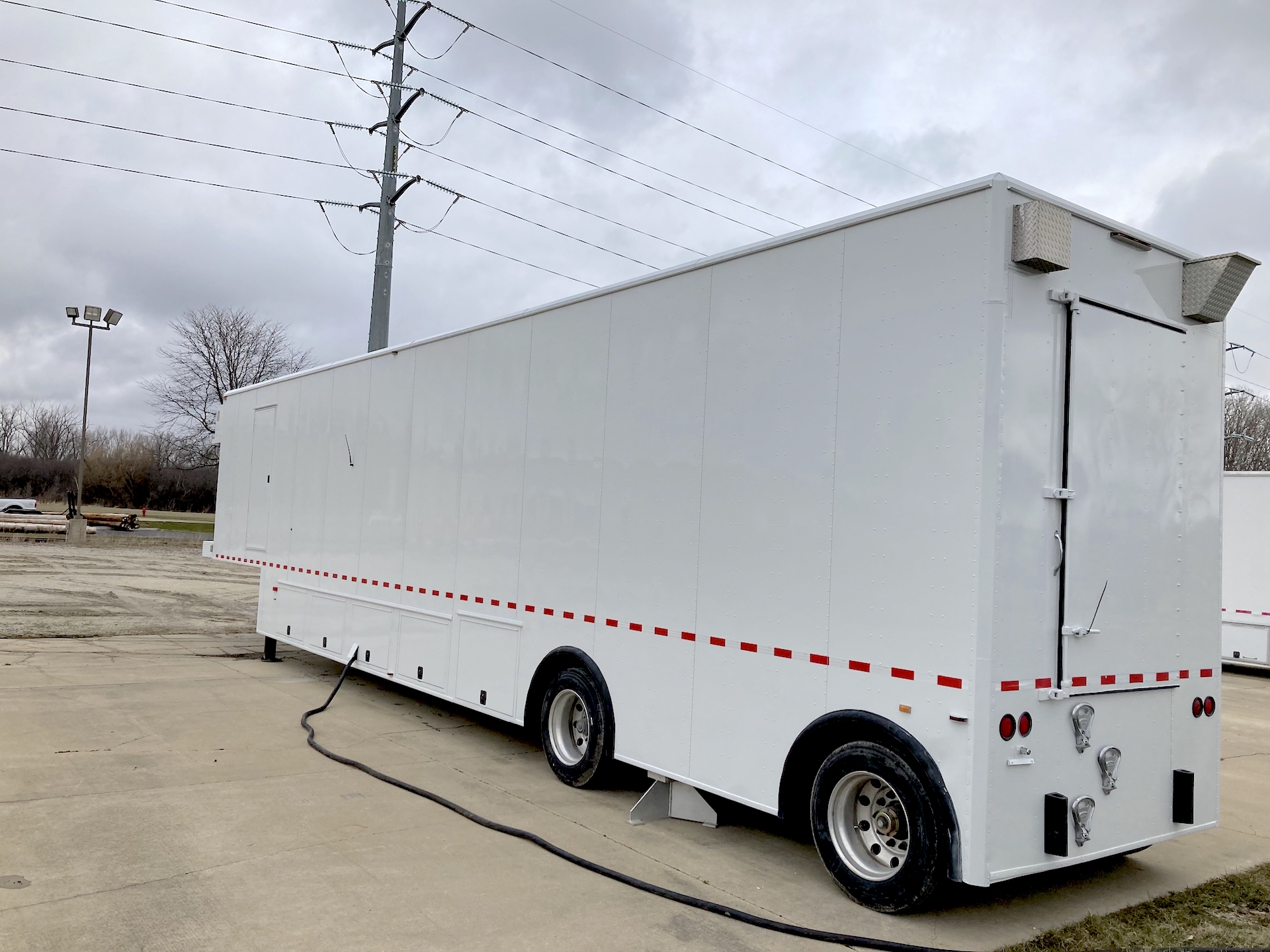
A mobile MRI trailer typically measures 8’6″ in height and 48’3″ in length, or approximately 53 feet total when the A/C unit is included. By contrast, a traditional hospital MRI installation requires the construction of multiple dedicated spaces to accommodate the scanner and supporting equipment.
With a mobile MRI, only a single space is needed, which along with several other advantages, is why leasing a mobile unit is often less stressful and more cost-effective. Leasing a mobile MRI involves fewer requirements and significantly faster setup, allowing facilities to become operational much more quickly.
Internal Space
Inside the mobile MRI unit, the scan room is generally more compact than in a fixed MRI suite. The design focuses on functionality and efficiency, ensuring the scan area accommodates the MRI machine, operator space, and essential equipment. While the scan room might be smaller, the imaging technology inside is virtually identical to the large-scale machines found in fixed MRI facilities.
The smaller internal space can influence patient comfort, as there may be less room around the patient during scanning. However, the imaging quality remains high, with mobile units offering the same detailed results that a traditional system would provide.
Mobile MRI systems are designed to provide the same resolution and clarity, ensuring that healthcare providers get the reliable, detailed images they need for accurate diagnoses. So, while the room around the machine may be smaller, the capability of the system itself remains just as powerful.
Why Does Size Matter for Mobile MRIs?
Facility Constraints
Mobile MRIs are ideal for facilities with limited space or resources. They provide healthcare providers the ability to offer MRI services without the need for extensive renovations or the construction of dedicated MRI rooms. For facilities looking to expand diagnostic capabilities without investing in expensive and permanent infrastructure, mobile MRI rentals offer a practical solution.
Flexibility in Deployment
This flexibility is invaluable for healthcare providers who need to offer imaging services to multiple locations or provide backup capacity during peak demand periods. The ability to move the equipment between different locations enables hospitals and clinics to meet the growing needs of their patient populations without the need for costly permanent upgrades.
Patient Access to Imaging
Mobile MRI systems are especially beneficial in rural or underserved areas, where access to diagnostic imaging may be limited. These units can be deployed to provide much-needed services in locations that would otherwise lack the infrastructure for traditional MRI systems. This helps bring advanced healthcare services to those who need them most.
Practical Considerations for Mobile MRI
Healthcare facilities need to account for several logistical factors when deploying them. Site preparation is essential, including ensuring the location has adequate space for the trailer, power supplies, and other necessary utilities. For example, the trailer may require a dedicated pad or parking space, along with sufficient clearance for access.
Conclusion
In summary, mobile MRI scanners are not smaller than traditional MRI systems. They provide healthcare facilities with the flexibility, cost-effectiveness, and mobility needed to expand diagnostic imaging capabilities. Mobile MRI units offer high-quality, reliable imaging technology that matches the capabilities of fixed MRI systems. Whether for a rural clinic or a large hospital, mobile MRI units offer an excellent solution for expanding imaging services without the need for extensive construction or upfront capital costs.
If you’re considering mobile MRI rentals for your facility, understanding the size implications and benefits can help you make an informed decision on the right solution for your needs.